

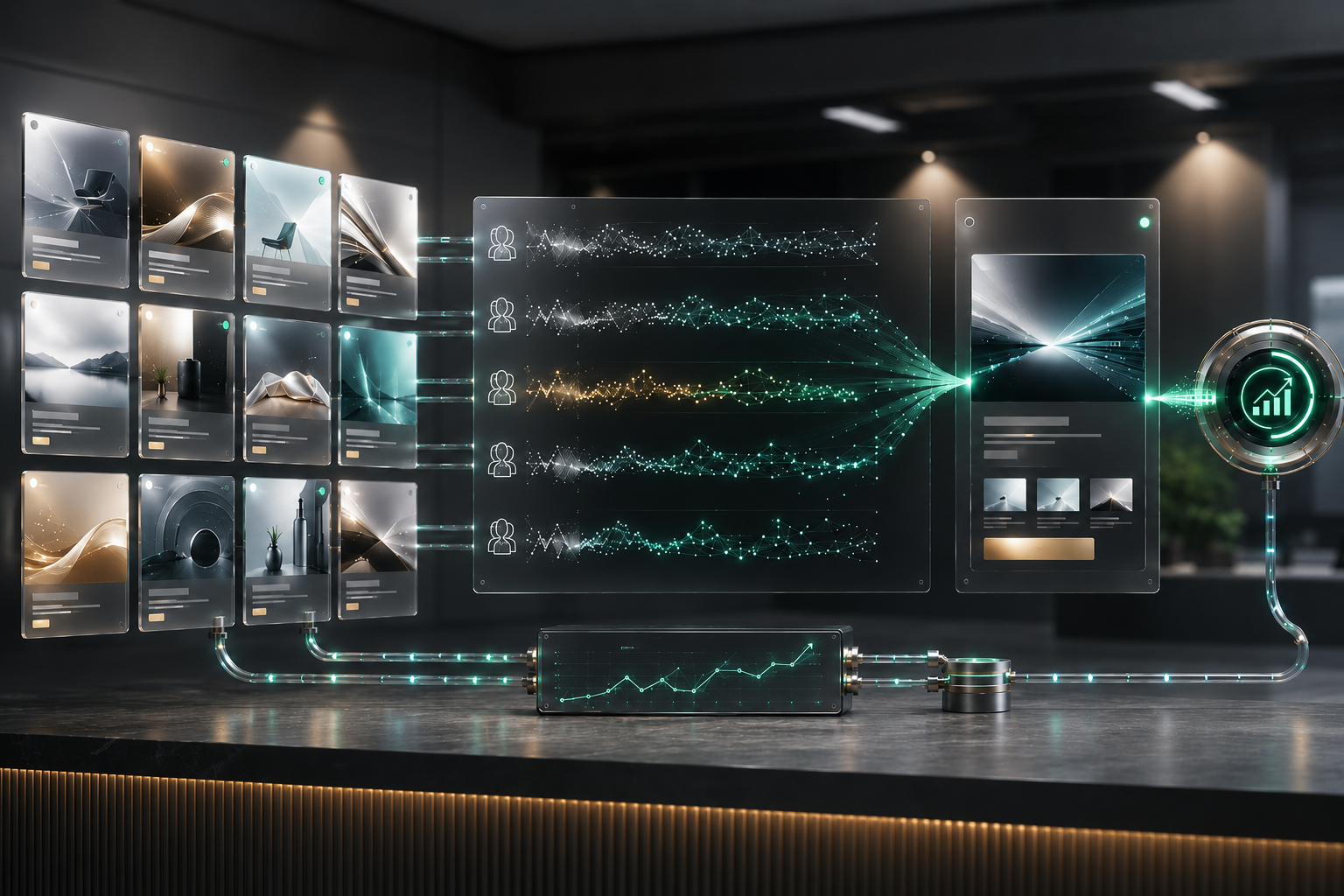
Use digital marketing to create connected experiences that drive interest, demand and loyalty.
How Modern Brands Use Digital Systems to Reach, Educate, and Convert Buyers Across Every Stage of the Funnel.
“Digital marketing isn’t one channel — it’s an integrated system of signals that guides the entire customer journey.”
01
Digital Marketing Is Evolving—And So Are Expectations.
The digital landscape has transformed dramatically. Algorithms shift faster. Creative formats adapt constantly. New channels emerge every year. And customers — pros and consumers alike — expect relevance, clarity, and seamless movement across touchpoints.
The modern marketer’s challenge:
Use the right channels at the right moments and synchronize them into a single connected experience.
Digital isn’t about dumping ads into feeds.
It’s about orchestrating how awareness becomes interest, interest becomes demand, and demand becomes loyalty.
02
The Major Channels—What They Do Best.
The modern digital ecosystem by primary channel type, with each mapped to its strengths across the funnel.
Social Channels—Meta, YouTube, LinkedIn, Reddit:
Meta (Facebook + Instagram):
Best for: awareness → engagement → retargeting
Strengths: massive reach, behavioral targeting, strong creative testing
Effective for: pros researching brands, product discovery, local/regional campaigns
YouTube
Best for: top and mid-funnel education
Strengths: instructional content, brand storytelling, high-intent search
Effective for: pros searching for “how-to” content, demos, installation walk-throughs; gives brands industry credibility
Best for: B2B targeting and lead gen
Strengths: job data, professional segmentation, industry reach
Effective for: thought leadership, product education, professional trust moments
Best for: niche thought leadership and early consideration
Strengths: community-driven influence, trade, and technical forums
Effective for: pro research, community conversations, insights from real practitioners, and field installs
“Social channels shape consideration — and build the belief that drives action.”
Programmatic Display & Native Advertising:
Best for: broad awareness → retargeting → reinforcement
Strengths: scale, contextual relevance, precise behavioral targeting
Effective for: national pro audiences, geo overlays, competitive categories, trade verticals
Programmatic keeps your brand consistently present — especially when paired with CRM-based segments and intent data.
Search (Paid + Organic):
Best for: capturing intent and converting demand
Strengths: search-driven solutions, real-time decision moments
Effective for: high-intent keywords, competitive product categories, local services, promotional leads, technical specs
Search is the closest point to action — especially for pros solving problems on mobile in real time.
CTV (Connected TV):
Best for: premium awareness and perception shifts
Strengths: non-skippable inventory, precise household/pro targeting
Effective for: category education, new product launches, national campaigns
CTV gives performance and brand teams the same advantage: targeted reach at scale.
Digital Audio (Spotify, Pandora, Podcasts):
Best for: top/mid funnel reinforcement
Strengths: captive audiences, habitual listening, high recall
Effective for: pros who work on the move — contractors, clinicians, technicians, sales reps
Audio fits naturally into professional routines: driving, working on site, learning, researching.
03
The New Core: Audience Intelligence.
The most important shift in digital marketing is that audiences are no longer static lists.
They are dynamic, continuously updated data assets.
Modern audience building includes:
First-party CRM audiences:
Customer records beyond the basic attributes—enriched with job role, trade type, buying behavior, and engagement history.
Lookalike and modeled audiences:
Built from your best customers, your most engaged pros, or your highest-value segments.
Intent and behavioral audiences:
Formed from search patterns, site browsing, video views, content interactions, and product signals.
Trade-specific segments:
Contractors, installers, dealers, clinicians, inspectors, architects — each with unique needs and buying triggers.
Journey-stage audiences:
Pros at the research stage, evaluation stage, purchase stage, or retention stage — based on real engagement.
Cross-channel audience sync:
CRM → paid media → email → website → field sales tools
When audiences evolve with every interaction, campaigns get smarter every day — and performance compounds over time.
04
Digital → Omnichannel: How Channels Fuel Each Other.
The real power of digital comes when channels no longer operate independently.
Examples:
Search queries inform content and email nurture paths
Meta and YouTube engagement fuels retargeting and lead scoring
CRM signals shape bidding in programmatic and social
Journey-stage behavior triggers email, SMS, and sales outreach
Product page visits feed into field sales tools
This creates what modern marketing needs most:
An omnichannel loop where every interaction strengthens the next message.
05
The New Era of Optimization: Testing at Scale.
Testing used to be simple A/B experiments.
Now optimization is a continuous, multi-layer system driven by creative, audience, and bidding intelligence.
What’s new and advancing fast:
Multivariate creative testing:
Hundreds of creative variations, tested automatically.
Dynamic Creative Optimization (DCO):
Personalized creative matched to segments or behaviors.
AI-driven bidding strategies:
Platform algorithms allocate budgets toward the highest-likelihood actions.
Cross-channel frequency management:
Preventing fatigue, managing sequence, optimizing touch cadence.
Incrementality and lift experiments:
Proving what truly works—not what looks good in a dashboard.
Engagement-based modeling:
Using real-time actions to update audience value and conversion probability.
Creative + audience pairing intelligence:
Matching the right message to the right pro segment.
Optimization is becoming less about manual tweaks—and more about creating systems that learn.
06
What This Means for B2B and B2B2C.
Even in B2B, customers are behaving like digital-first professionals:
Researching products online
Comparing options on mobile
Watching videos for training
Visiting forums for peer insight
Expecting personalized messages
Moving fluidly between channels
Pros want a connected experience—one that respects their time and gives them answers quickly.
Digital can no longer be limited to awareness or leads. It must support research, drive consideration, enable conversion, and reinforce loyalty, integrated with email, SMS, and in-person.
That’s modern B2B.
That’s B2B2C.
That’s the new digital ecosystem.
The Signal
Better growth decisions start with better intelligence.
Catch the Signal for practical thinking on Growth Intelligence, professional markets, connected data, AI, go-to-market strategy, and what is changing next.
Catch the Signal. Stay ahead of the noise.