

From Chaos to Clarity: Turning Customer Data Into an Activation Engine
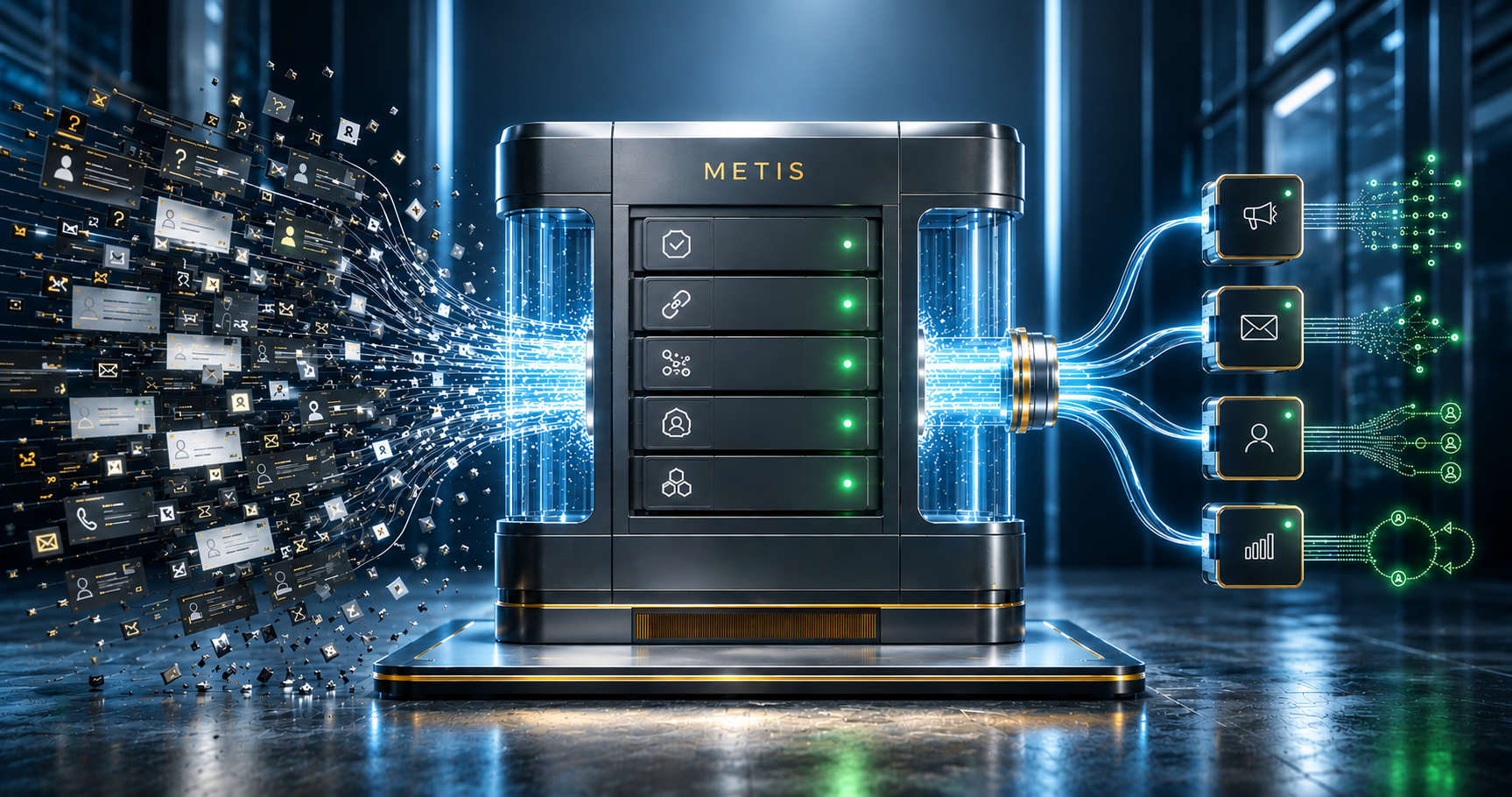
Readying customer data for sales and marketing activation.
1. The Problem: Customer Data Chaos
Most organizations are sitting on a goldmine of data—locked in silos, riddled with duplicates, and scattered across disconnected systems.
CRM, marketing automation, ecommerce, support, call centers, trade programs, and field sales apps—all collect fragments of the same customer story. But without integration, those fragments never form a complete picture.
The result?
Campaigns that miss the mark.
Sales teams operating on outdated information.
Customers receiving inconsistent experiences.
Data chaos isn’t just messy—it’s costly. It slows response times, clouds insights, and weakens decision-making.
“Data doesn’t drive growth until it’s clean, connected, and activated.”
2. The Fix: Unify, Validate, and Deduplicate
The first step toward activation is building a single, unified view of every customer—one that merges, cleans, and reconciles records across systems.
This means:
Combining Data Sources: Merging CRM, ERP, POS, and marketing data into one consistent model.
Deduplication: Identifying duplicate records and resolving them to a single entity.
Validation: Standardizing formats (addresses, emails, SKUs, industry titles) and flagging incomplete or invalid data.
When data is unified, it stops working against you and starts working for you.
“Clean data is invisible—because it just works.”
3. The Next Step: Enrich and Augment
Once your foundation is clean, it’s time to expand its intelligence.
Augment each record with:
Additional attributes: industry associations, company size, preferred information outlets, role, location, and revenue.
Behavioral insights: web visits, email engagement, ad interactions, social signals.
External enrichment: third-party data providers and intent signals to fill the gaps.
These layers transform a static list into a dynamic customer intelligence platform.
4. Tracking Every Interaction: The Data Feedback Loop
Unified data doesn’t end with enrichment—it’s a living system. Every campaign, click, or call creates new information that needs to be fed back into the customer profile.
When each record becomes a timeline of engagement, you unlock hyper-personalization:
Messages that reflect the last interaction.
Campaigns that adapt to recent behavior.
Recommendations that evolve with intent.
This is how marketing stops feeling automated and starts feeling human again.
5. Modeling for Action: Predict, Prioritize, Personalize
With unified, enriched data in place, AI and analytics can go to work—turning information into predictions and strategies.
Models can identify:
High-potential customers primed for upsell or expansion.
At-risk customers likely to attrite without intervention.
Cross-sell opportunities based on shared patterns and behaviors.
These insights help marketing and sales teams prioritize where to spend energy—and automate intelligent next steps at scale.
“Data modeling turns hindsight into foresight.”
6. Activation: Closing the Loop with Sales
Finally, the unified customer record connects back to the people who need it most—your field and inside sales teams.
By syncing enriched profiles, engagement history, and predictive insights directly into CRM or sales enablement tools, reps can:
See every marketing touchpoint in one place.
Receive next-best action recommendations.
Personalize outreach with data-driven confidence.
The cycle completes when insights move from the marketing cloud back to the field—fueling smarter conversations and stronger relationships.
7. The Future: Data as a Living System
In the new era of marketing, data is not a database—it’s an ecosystem.
It evolves, learns, and feeds back intelligence with every interaction.
Organizations that master this loop—unify, cleanse, enrich, model, and activate—will outperform those still struggling with disconnected spreadsheets and CRMs.
The result is not just operational efficiency.
It’s customer intimacy at scale.
We don’t run campaigns. We engineer growth systems. Explore the METIS Growth Framework.